
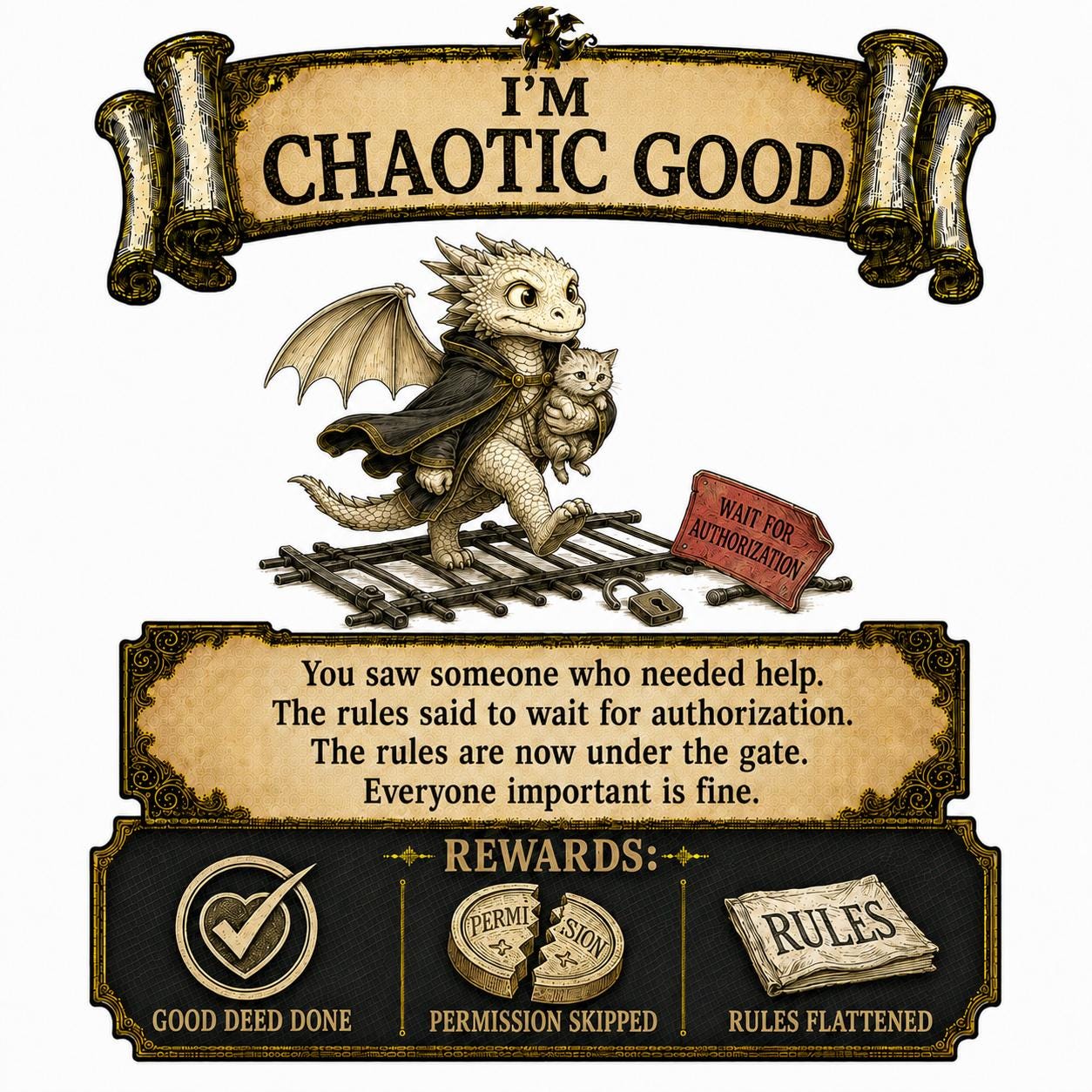
When I first created the Alignment collection, the idea seemed straightforward enough: take the classic nine-role alignment chart familiar to tabletop gamers and turn each alignment into a mug.
Simple.
This was, of course, before I started thinking about it.
The problem was that an alignment can mean two slightly different things. There is the alignment of the fantasy character you play, and then there is the alignment you display while wandering through the much stranger campaign known as everyday life.
Those are not necessarily the same person.
Your lawful good paladin might return every extra gold piece after discovering that the king overpaid the party’s reward. You, meanwhile, might identify as lawful good because you return your shopping cart even when nobody is watching.
Both are lawful good. Only one comes with experience points, and somehow it is not the shopping cart.
That realization led to a complete revision of the Alignment collection. Each of the nine alignments now has two different versions.
The mugs titled simply “Lawful Good,” “Chaotic Neutral,” or “Neutral Evil” represent the fantasy character version of the alignment. These are for the heroes, villains, questionable rogues, overly principled paladins, and walking campaign complications we create for tabletop roleplaying games.
The “I’m Lawful Good,” “I’m Chaotic Neutral,” and “I’m Neutral Evil” mugs bring those same alignments into the modern world. These are based on the choices we make in offices, parking lots, group chats, apartment buildings, and other places where civilization is technically occurring.
For example, the fantasy Lawful Good character returns the king’s extra gold and requests an official receipt. The contemporary version returns the shopping cart because it is the right thing to do, even though nobody is watching and no reward has been offered.
The True Neutral character seeks balance in a complicated fantasy world. The person holding the “I’m True Neutral” mug is asked to choose between two terrible options in the group chat and replies, “Either works.”
Balance has been maintained. Nothing has been resolved.
Then there is “I’m Neutral Evil,” where the last doughnut disappears, the empty box is hidden, and everyone is allowed to blame Kevin.
Kevin knows what he did.
Actually, Kevin did nothing. That is what makes it Neutral Evil.
Creating both versions also gave the collection a little more room to breathe. The fantasy designs can lean into the fun of playing a character whose moral compass may be heroic, flexible, or actively smoking. The contemporary designs can explore what those same alignments look like when applied to the small decisions that reveal who we really are.
Do you return the lost wallet but ignore the official lost-and-found procedure? Neutral Good.
Do you photograph a neighbor’s trash bin because it remained outside eleven minutes past the time permitted by the HOA bylaws? Lawful Evil.
Do you press every button in the elevator?
You know exactly what you are.
The revised collection now includes eighteen designs: all nine alignments in both fantasy-character and real-world “I’m” versions.
So now the question is not simply, “What is your alignment?”
It is also, “Are we talking about the noble adventurer you play on Saturday night, or the person who took the last doughnut on Monday morning?”
Choose carefully.
Kevin is watching.